
Mode
Blended
Duration
October 2026 – January 2028
Dates
October 2026
Schedule
Alternate Tuesdays and Wednesdays (every other week) from 9:00 AM to 6:00 PM.
Languages
Spanish, Catalan and English
Credits
90 ECTS
Places
thirty
Price
90€ / ECTS + Fees
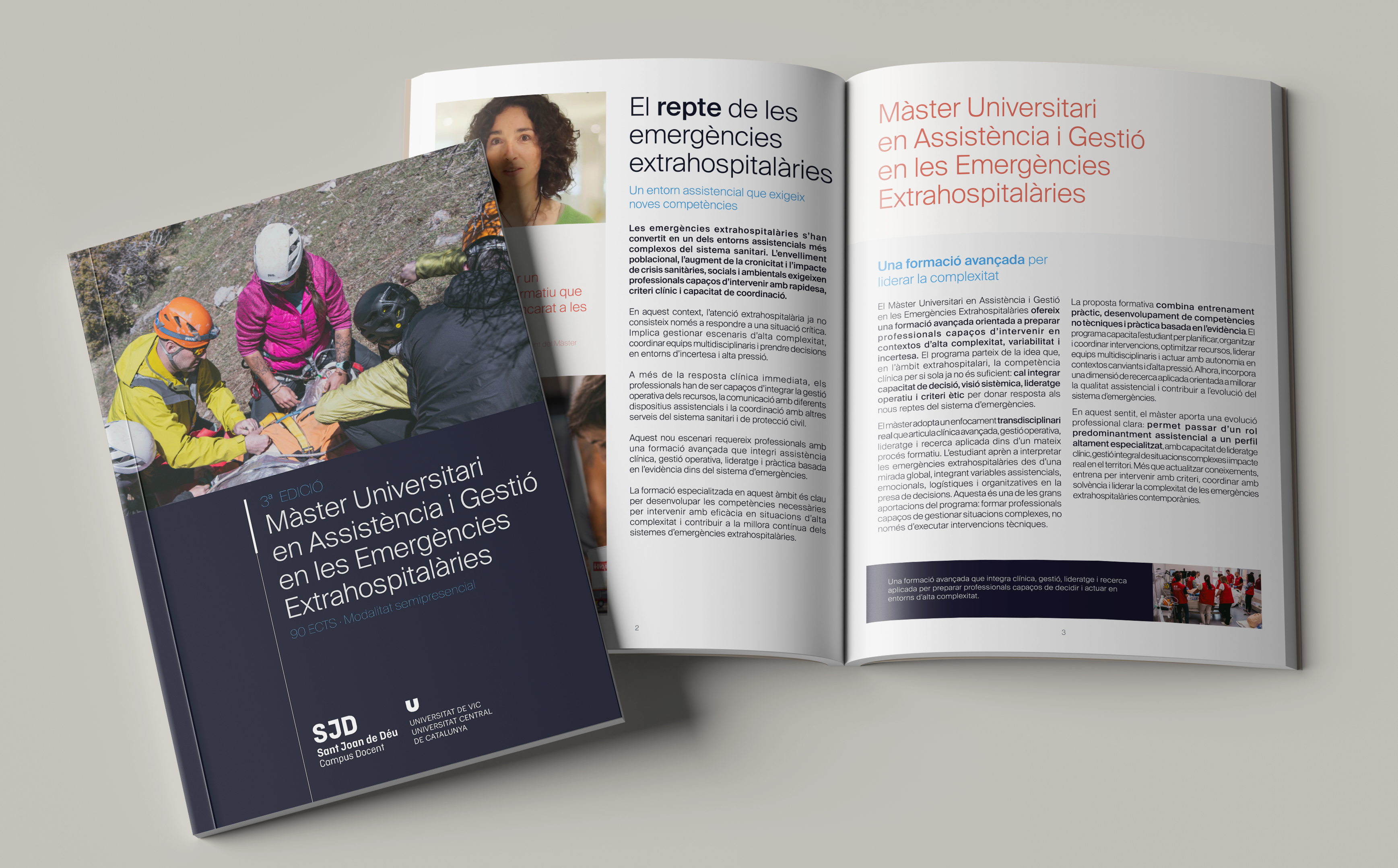
Information dossier
View and download the informational brochure with all the information.
Presentation
Out-of-hospital emergencies have become one of the most demanding settings in the healthcare system. Population aging, chronic conditions, and health crises require professionals capable of making rapid decisions, coordinating teams, and managing high-uncertainty situations.
In this context, out-of-hospital care goes beyond a one-off intervention and involves leading complex scenarios, optimizing resources, and acting with clinical judgment in high-pressure environments.
The University Master’s in Emergency Care and Management, in its third edition, trains medical and nursing professionals with a comprehensive approach that combines advanced clinical care, operational management, and leadership.
Through a transdisciplinary approach based on simulation, real-world practice, and decision-making, the program equips participants to manage critical situations with scientific rigor and professional responsibility, while also incorporating research and evidence-based practice as a lever for development and access to doctoral studies.
Lead outpatient care and management
Develop advanced knowledge in the clinical management and care of out-of-hospital emergencies to intervene with clinical judgment and operational capability in complex environments.
Solid foundations for transforming clinical management on the ground
Provide a solid theoretical and methodological foundation that enables efficient clinical and organizational decision-making in the real-world context of emergency systems.
Leadership and teamwork in multidisciplinary teams
Develop leadership, communication, and coordination skills to analyze complex situations and work with multidisciplinary teams in high-pressure scenarios.
Research to improve patient care
Train professionals with critical analysis skills and research competencies to integrate scientific evidence into out-of-hospital emergency practice.
Training for sustainable emergency systems
Promote a comprehensive vision of the healthcare system that integrates efficiency, sustainability, and continuous improvement in the management of emergency services.
Ethics and Responsibility in Decision-Making
Incorporate ethical criteria and professional responsibility into clinical and operational decision-making in emergency situations.
Plenary sessions
Faculty-led sessions to introduce key concepts, clinical frameworks, and decision-making criteria in the field of out-of-hospital emergencies.
Flipped classroom
Self-directed preparatory work using digital materials and scientific resources that allows face-to-face sessions to be devoted to analysis, debate, and decision-making.
Problem-based learning
Resolving complex situations based on real challenges in the emergency field to foster critical thinking and decision-making.
Case analysis
Study and discussion of real clinical cases to integrate clinical knowledge, operational management, and professional judgment.
Clinical Skills Simulations
Practical training in essential technical procedures and skills for extrahospital emergency intervention.
High-fidelity simulations
Complex clinical scenarios that replicate real emergency situations to train decision-making and teamwork.
Operational Simulations
Practical exercises that recreate emergency situations with team coordination and resource management in high-pressure environments.
Non-face-to-face activities
Work online with questionnaires, forums, and analysis activities that reinforce learning and critical reflection.
Curriculum
The master’s program has a total of 90 ECTS and is structured over three semesters (one and a half academic years) in a blended mode. The curriculum combines mandatory and elective courses focused on clinical practice, prehospital emergency management, and research training.
Subject 1: Clinical and Organizational Management of Advanced Outpatient Care
Clinical and Organizational Management of Out-of-Hospital Emergencies I (OB)
12 ECTS
Clinical and Organizational Management of Out-of-Hospital Emergencies II (OB)
6 ECTS
Technical Skills and Simulated Clinical Practice (OB)
12 ECTS
Management and Quality Strategies in Emergency Systems (OB)
6 ECTS
Clinical and Organizational Management of Out-of-Hospital Emergencies III (OB)
6 ECTS
Subject 2: Leadership and Management Policies for Non-Technical Skills
Leadership and Effective Communication Strategies (OB)
6 ECTS
Management and Teamwork (OB)
6 ECTS
Subject 3: Basic Research
Quantitative, Qualitative, and Mixed Methods Research (OB)
6 ECTS
Subject 4: Clinical and Organizational Management of Outpatient Care in Special Situations
Clinical and Organizational Management of Mental Health Emergencies (OP)
3 ECTS
Clinical and Organizational Management of Obstetric and Pediatric Emergencies (OP)
3 ECTS
Clinical and Organizational Management of People on ECMO (OP)
3 ECTS
Clinical and Organizational Management of the Burn Patient and Pain Care (OP)
3 ECTS
Optional Tests (OP)
3 ECTS
Subject 5: Advanced Research
Biostatistics (OP)
3 ECTS
Systematic Reviews (OP)
3 ECTS
Data Analysis in Qualitative Research (OP)
3 ECTS
Qualitative Reviews (OP)
3 ECTS
Subject 6: Master’s Thesis
Master’s Thesis (TFM)
12 ECTS
Subject 7: Internship
External Internships (PAE)
6 ECTS






Admission Profile
- Graduates or diploma holders in Nursing or Medicine.
The program is especially suitable for professionals who work or want to work in emergency services, out-of-hospital emergency care, or high-demand care settings.
It is also aimed at professionals interested in deepening their evidence-based research and practice, with the possibility of continuing their academic journey in doctoral studies.
It is recommended to have English reading comprehension skills.
General access requirements
You can access a university master’s degree if you have:
- an official Spanish university degree (regardless of level and duration).
- A degree awarded by a higher education institution in another member state of the European Higher Education Area, which in the issuing country qualifies for admission to master's degree programs.
- A foreign university degree from outside the European Higher Education Area (EHEA), without the need for its legalization, that is of an educational level equivalent to a national official degree and which in the country of origin allows access to postgraduate studies.
- you are pursuing an official degree at a university in the Spanish State and only need to pass the Final Degree Project to obtain the degree. To ensure priority for students who already hold a bachelor's degree, you can only formalize your pre-enrollment and take a conditional enrollment for the master's program during the last period of the application schedule. The condition is that you provide proof that you have registered for your thesis and are eligible to graduate during the same academic year you are enrolled in the master's program. Under no circumstances can you obtain the master's degree if you have not first obtained the official bachelor's degree.
In addition to the general admission requirements, each master’s program has specific admission requirements and selection criteria.
Admission criteria
- Possess an official university degree or equivalent in Nursing or Medicine.
Selection criteria
If the number of applications for admission from eligible individuals exceeds the number of available places, the following criteria are applied to rank the admission applications:
- Academic record (20%): the average score obtained in the bachelor's degree or licenciatura.
- Academic training (20%): additional training related to the master's topic.
- Professional experience (40%): professionals working in specialized services related to out-of-hospital emergencies, emergency care, or critical care, taking into account years of experience in each area.
- English knowledge (10%): minimum B1 level
- Participation in scientific activities (10%): participation in emergency-related activities and national or international publications.
5% of the places are reserved for students with a recognized disability and specific educational support needs, in accordance with Article 18.6 of Royal Decree 822/2021, of September 28, which establishes the organization of official university studies.
Learning outcomes
Knowledge
- To integrate specialized and advanced knowledge into the context of care and clinical and organizational management of out-of-hospital emergencies with a gender perspective.
- Understand the out-of-hospital setting and critically interpret any scenario, making the best possible use of technology.
- To integrate technological, social, and cultural advances in the field of prehospital emergency care in a society undergoing continuous change.
- Recognize the impact of policies, strategies, and decisions on prehospital emergency management through advanced analysis techniques and methodologies.
- Integrate the stages and components of the scientific method to support evidence-based practice in out-of-hospital emergencies.
Skills
- To efficiently use communication and information technologies for professional practice in the field of prehospital emergency care.
- Apply creative skills to intervene in the continuous improvement processes of the management of the extrahospital emergency plan.
- Demonstrate theoretical knowledge and practical skills for problem-solving in the field of prehospital emergencies and within transdisciplinary teams during academic training.
- Evaluate the information available in academic and professional settings for out-of-hospital emergencies to make decisions that integrate knowledge, skills, and social and ethical responsibilities according to each team member's competencies.
- Demonstrate, according to each team member's competencies, technical skills in transdisciplinary environments within professional practice in the field of prehospital emergency care.
- Transfer the scientific basis of acquired research knowledge to specialized and non-specialized audiences to propose new approaches that involve the use of reflective and creative thinking in the field of prehospital emergencies.
- Promote effective communication strategies among the multidisciplinary team and other responders in the field of prehospital emergency care.
Competencies
- Demonstrate autonomy and creativity in problem-solving and develop clinical and research skills that foster teamwork, social responsibility, intellectual honesty, and scientific integrity.
- Develop an ethical and responsible commitment to the plurality and diversity of societal realities that fosters respectful relationships through clear and assertive listening in highly complex and/or hostile out-of-hospital settings.
- Efficiently carry out the functions of planning, organizing, managing, and communicating in professional and research practice, according to each team member's competencies.
- Efficiently design clinical strategies in complex locations in accordance with the principles of sustainability and environmental and socioeconomic development.
- Develop, in accordance with professional competencies, the necessary clinical and organizational management skills to handle circumstances requiring judgment, personal responsibility, and initiative in complex and unpredictable out-of-hospital professional settings.
UVic-UCC Regulations
Master’s Director
Accreditation
The University of Vic – Central University of Catalonia (UVic-UCC), in collaboration with the Sant Joan de Déu Teaching Campus, will award the Master’s degree in Prehospital Emergency Care and Management to students who meet the program’s academic requirements.

In addition, the student will obtain:

- Advanced Life Support, accredited by the ERC
- Pediatric Advanced Life Support, accredited by the ERC
- European Trauma Course
Duration and schedule
The master’s program is delivered in a blended mode and is structured into three semesters. The first year is organized into a first semester from October to January and a second semester from February to June. The third semester (second year) takes place from October to January and is primarily focused on external internships and the Master’s Thesis.
In-person sessions are held every other week, usually on Tuesdays and Wednesdays. Between sessions, the student prepares the work from home with the support of the virtual classroom, which integrates materials, clinical cases, digital resources, and tools for independent study.
Given the applied nature of the program, there are activities with mandatory attendance due to their accreditation and practical nature, such as Advanced Life Support, Pediatric Advanced Life Support, and the European Trauma Course, as well as assessment tests, in-person exams, and externships.
Dates of interest
Tuition
Until September 23, 2026
Early registration discount
Until May 29, 2026
Start of the school year
October 2026
Tuition
- Properly completed and signed master's and postgraduate enrollment form.
- Official document certifying the university degree (download from My Citizen Portal or equivalent), which includes a secure verification code (CSV) or an electronic validation mechanism.
- A passport-sized photograph.
- Photocopy of the official identity document
(ID card). - Motivation letter
- Academic record
- Resume
- Early Registration Discount: All students who choose to register within the period established by the Teaching Campus as "early registration" will be entitled to a 10% discount on the total amount (registration credit price) of the Postgraduate Training set for that academic year (fees excluded). Under no circumstances will this discount apply outside this period.
- Discount for Single Payment: Students who choose to pay the full amount for their chosen training will be entitled to a 10% discount for single payment.
- Campus Employee Discount: All Campus employees and their children are entitled to a 25% discount on the credit tuition price of Postgraduate Education (fees excluded).
- Discount for Sant Joan de Déu Teaching Campus Alumni: 15% off the credit price. Not valid with other discounts (fees excluded).
- Discount for employees of other centers of the Order of Saint John of God: a 10% discount will be applied to the credit price.
The applied bonuses or discounts are not cumulative with each other or with other current reductions or promotions (administrative fees excluded).
Price
90€ / ECTS + Fees
This amount includes all training and program-related activities at no additional cost.
Specifically, the master’s program fee includes:
- In-person and online instruction, with full access to the virtual classroom, teaching materials, and academic resources.
- Practical activities and clinical simulations, as well as externships at partner institutions.
- Professional certifications included in the program: Advanced Life Support and Pediatric Advanced Life Support accredited by the European Resuscitation Council (ERC), and the European Trauma Course (ETC).
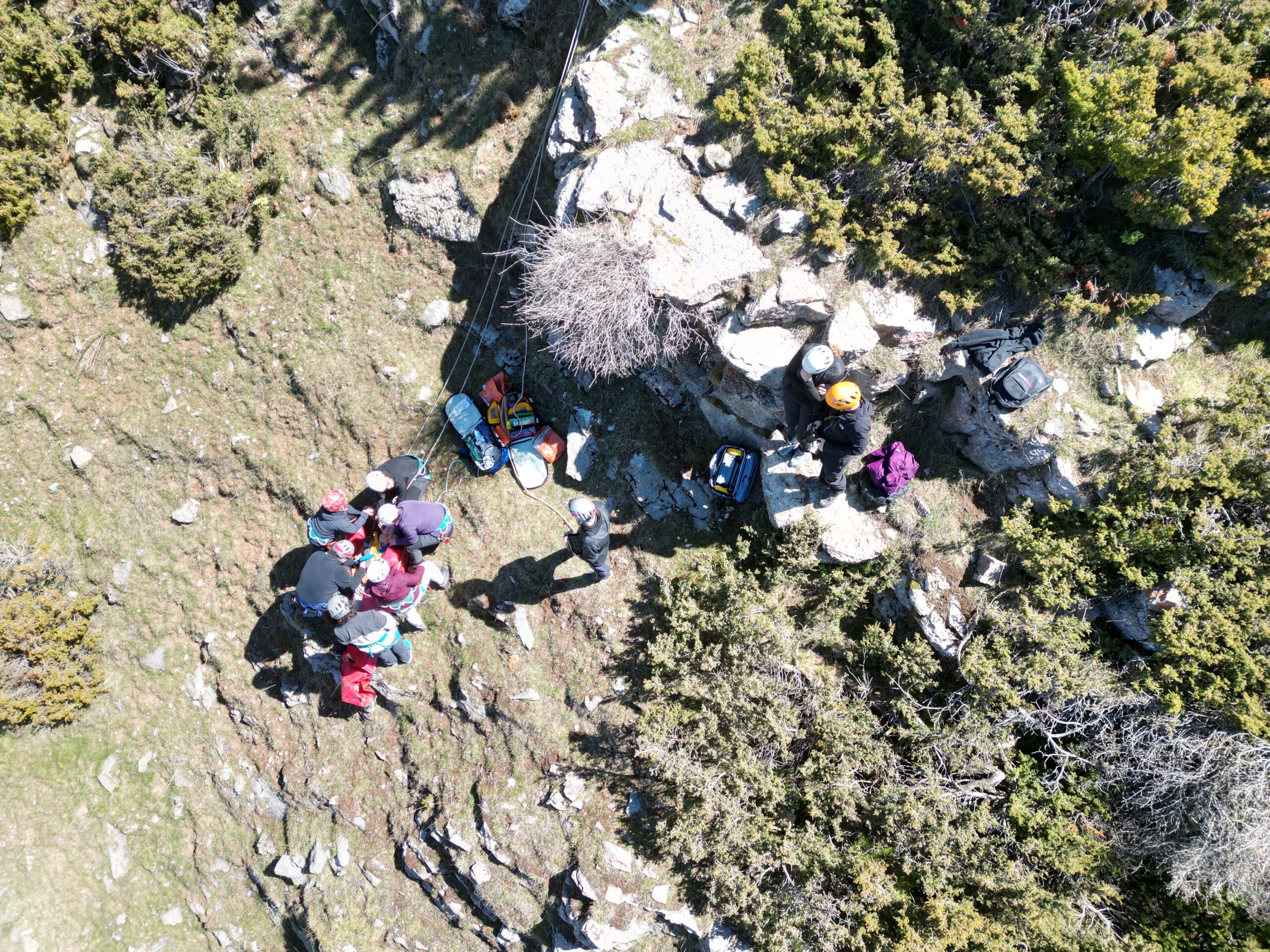
- Specialized training activities, such as the training stay in the Cerdanya as part of the Mountain Medicine module.
- Academic and clinical tutorial support throughout the program and academic insurance.
Contact
Office of University Studies