

Mode
Blended
Duration
October 2026 – July 2027
Start date
October 2, 2026
Streaming schedule
Saturdays from 9:00 AM to 2:00 PM
In-person schedule
Friday from 9:00 AM to 2:00 PM and from 3:00 PM to 5:00 PM
Languages
Spanish
Credits
60 ECTS
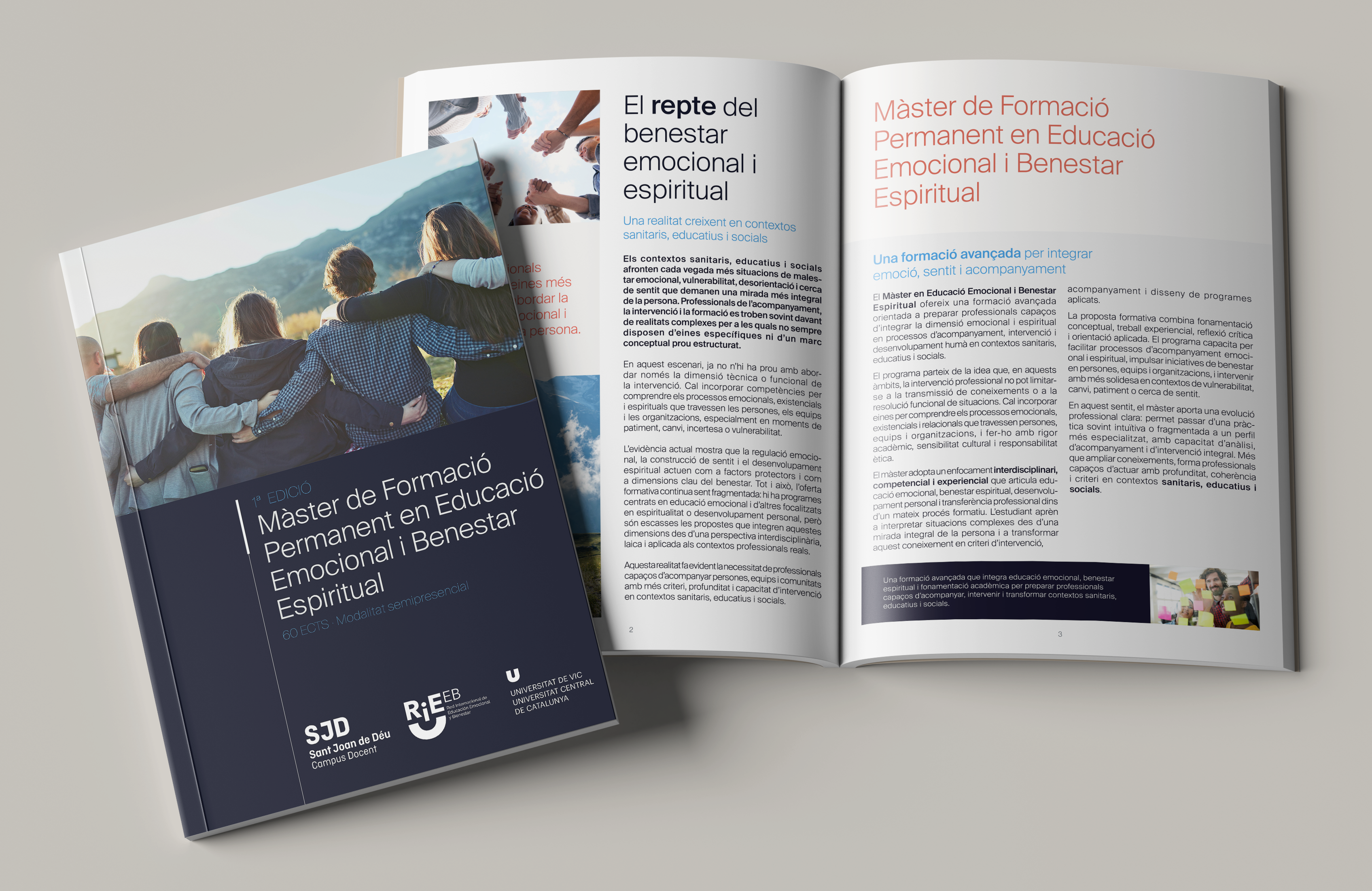
Information dossier
View and download the information brochure with all the information.
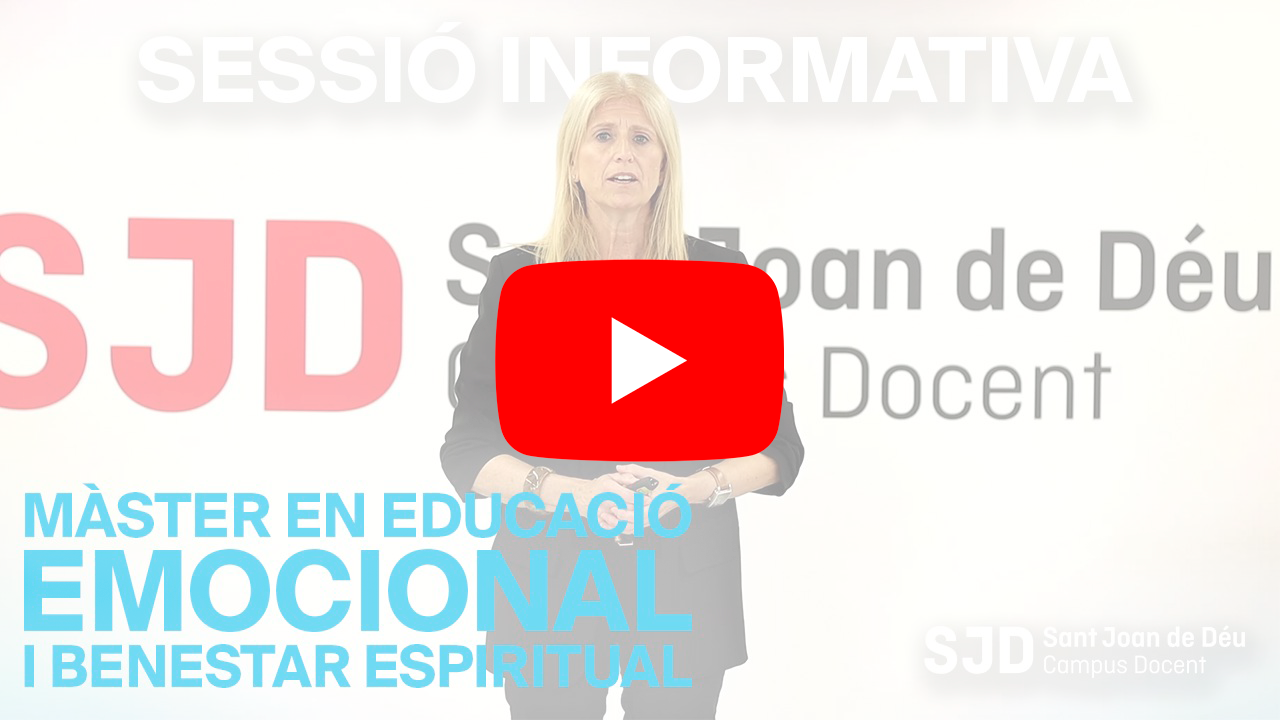
Presentation
The Master’s in Emotional Education and Spiritual Well-being addresses a growing need: to tackle well-being from a truly holistic perspective.
In healthcare, social, educational, and organizational settings, emotional complexity is no longer a secondary variable. It is central. And the ability to accompany processes of suffering, change, vulnerability, or transformation requires specific competencies, scientific grounding, and ethical judgment.
This master’s program integrates emotional education and the spiritual dimension in a structured way from a secular, plural, evidence-based perspective. It does not treat these dimensions as add-ons, but as interdependent pillars of personal and professional development.
The program combines academic rigor, experiential learning, and professional application, with the aim of training professionals capable of leading processes of care, well-being, and institutional transformation.
Collaboration Agreement
Co-directed by the RIEEB (International Network for Emotional Education and Well-being), this program incorporates the vision and expertise of an international network dedicated to advancing research, training, and dissemination of emotional education, reinforcing an approach that is connected to today’s challenges of well-being and competency development.
Develop a comprehensive perspective on human well-being
To enable the student to understand well-being from a biopsychosocial and spiritual model, integrating emotional, cognitive, and existential dimensions with scientific foundation and professional judgment.
Intervene in contexts of high emotional complexity
Provide the competencies to identify and address emotional and spiritual needs in healthcare, social, educational, and organizational settings, especially in situations of vulnerability or change.
Apply evidence-based support methodologies.
Train in practical tools for listening, emotional regulation, and meaning-making, adaptable to different professional contexts and respectful of cultural and spiritual diversity.
Designing well-being programs with institutional impact
Empowering individuals to plan, implement, and evaluate emotional and spiritual well-being initiatives in organizations, contributing to the transformation of professional culture.
Consolidate a humanist professional identity
Promote professional development based on self-reflection, responsible leadership, and the integration of personal growth and professional practice.
Methodology
Theoretical sessions with critical discussion
Experiential workshops
Analysis of real cases
Professional simulations
Interdisciplinary collaborative work
Development of applied projects
Reflection and supervision spaces
Hands-on learning
This experiential dimension consolidates operational and sustainable competencies in real practice.
Workshops on emotional awareness and affective regulation
Practices of mindful silence and existential reflection
Narrative exercises on meaning and vocation
Simulations of accompaniment in complex contexts
Development of applied projects in one’s own professional environment
Admission Profile
The Master’s in Emotional Education and Spiritual Well-being is aimed at professionals who want to integrate the emotional and spiritual dimension into their professional practice, especially in contexts where the helping relationship, team management, or support for life processes are central.
It is especially recommended for university graduates in the fields of health, education, psychology, social work, pedagogy, community action, human resources management, and other disciplines related to human development.
It is a program suitable for practicing professionals who:
- They want to deepen their emotional and spiritual support skills.
- They are looking to improve their communication and relational skills.
- They want to promote well-being projects in teams and organizations.
- They want to consolidate a more humanistic and reflective professional identity.
To access the program, a university degree is required. No additional specific requirements are set, but prior experience in working with individuals or teams is valued.
Curriculum
An academic curriculum oriented toward competency integration
Curriculum
Foundations of emotional education and spiritual well-being
5 ECTS
Contributions of neuroscience to the understanding and advancement of emotional health and spiritual well-being
4 ECTS
Ethics and Decision-Making: The Role of Emotions, Beliefs, Values, and Ideologies
4 ECTS
Emotional education and spiritual well-being. Care and self-care for professionals.
5 ECTS
Emotional and spiritual approaches
4 ECTS
Models of emotional and spiritual support
4 ECTS
Emotions and spirituality in the promotion of mental health and well-being
5 ECTS
Integration of the emotional and spiritual dimension in organizations. Culture and leadership
5 ECTS
New spiritualities, transformative human experiences, and emerging practices
7 ECTS
Challenges of Artificial Intelligence in Emotional and Spiritual Well-being
4 ECTS
Master’s Thesis
9 ECTS
Seminars on formative experiences and self-knowledge
1 ECTS
Master’s Director
Accreditation
The University of Vic (UVic-UCC), together with Campus Docent Sant Joan de Déu, will issue:

Master’s Certificate of Continuing Education (Proprietary Master’s) issued by the University of Vic – Central University of Catalonia (UVic-UCC) and a European digital certificate.
Duration and schedule
The course will begin on October 2, 2026, and will end on July 16, 2027.
- In-person hours: Fridays from 9 AM to 2 PM and 3 to 5 PM.
- Virtual: Saturdays from 9 AM to 2 PM. Classes can be synchronous (Saturday) or asynchronous (at the student's discretion within the deadlines set by the master's program director).
Dates of interest
Tuition
Until September 23, 2026
Early registration discount
Until May 29, 2026
Start of the school year
Until October 2, 2026
Tuition
- Properly completed and signed master's and postgraduate enrollment form.
- Early Registration Discount: All students who choose to register within the period established by the Teaching Campus as "early registration" will be entitled to a 10% discount on the total amount (per-credit tuition price) of the Postgraduate Training set for that academic year (fees excluded). Under no circumstances will this discount be applied outside this period.
- Discount for Single Payment: Students who choose to pay the full amount for their chosen training will receive a 10% discount for single payment.
- Campus Employee Discount: All Campus employees and their children are entitled to a 25% discount on the credit tuition price of Postgraduate Education (fees excluded).
- Discount for Sant Joan de Déu Teaching Campus Alumni: they will receive a 15% discount on the credit price. Not combinable with other discounts (fees excluded).
- Discount for employees of other centers of the Order of Saint John of God: a 10% discount will be applied to the credit price.
The applied bonuses or discounts are not cumulative with each other or with other current reductions or promotions (administrative fees excluded).
Price
€4,320 (Plus tax)
Check the discounts for OHSJD
professionals, student alumni, and more in the financial regulations.
Contact
Secretary of Masters, Postgraduate Studies, and Continuing Education