
Mode
In-person
Duration
4 academic years
Start date
September 2026
Schedule
Morning shift: 8 AM – 2 PM | Afternoon shift: 3 PM – 9 PM
Languages
Catalan
Credits
two hundred forty
Places
two hundred twenty
Presentation
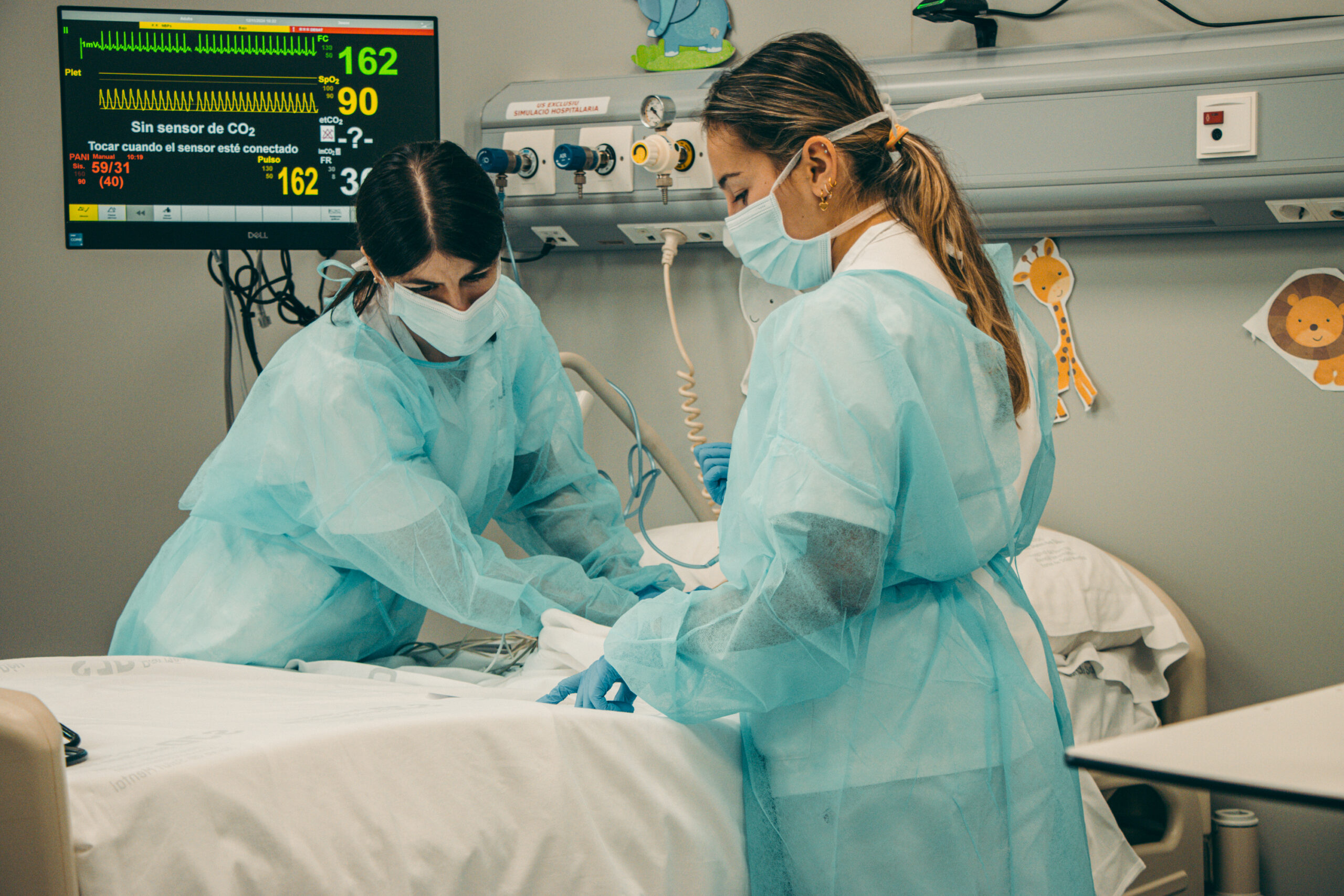
The Bachelor of Nursing degree from the Sant Joan de Déu Teaching Campus, affiliated with the University of Vic – Central University of Catalonia (UVic-UCC).

It offers you comprehensive, specialized training to practice as a nurse in the clinical, teaching, management, and research fields.
This official qualification enables you to address the health needs of individuals in various care settings, promoting the patient’s well-being, care, and autonomy.
Professional Outings
Once you have completed the degree, you will be able to practice as a nurse in hospitals, primary care, socio-sanitary centers, research, teaching, and healthcare management. In addition, the degree allows you to access university master’s programs.
Curriculum
The degree is structured over 4 academic years with a total of 240 ECTS credits, including required and elective courses, practical training, and the final project.
First Course
First Semester
6 ECTS
6 ECTS
6 ECTS
6 ECTS
6 ECTS
Second Semester
6 ECTS
6 ECTS
Professional Ethics and Legislation (OB)
6 ECTS
6 ECTS
6 ECTS
Second course
Annual
Practicum II (PAE)
9 ECTS
Practicum III (PAE)
9 ECTS
First Semester
Physiopathology (FB)
6 ECTS
Therapeutic Communication (FB)
6 ECTS
Pharmacology (FB)
6 ECTS
Methodological Foundations of Nursing (OB)
3 ECTS
Second Semester
Nutritional Foundations and Dietetics (FB)
6 ECTS
Scientific Methodology in Nursing Sciences I (OB)
3 ECTS
Nursing Care in Health Alterations I (OB)
6 ECTS
Family and Community Nursing Care (OB)
6 ECTS
3rd Course
Annual
Practicum IV (PAE)
12 ECTS
Practicum V (PAE)
12 ECTS
First Semester
Scientific Methodology in Nursing Sciences II (OB)
3 ECTS
Nursing Care in Health Alterations II (OB)
6 ECTS
Nursing Care for Women in Maternity and Reproductive Health (OB)
3 ECTS
Obstetrics and Gynecology (OB)
3 ECTS
Mental Health Nurse Care (OB)
3 ECTS
Second Semester
Health Education (OB)
6 ECTS
Nursing Care in Childhood and Adolescence (OB)
3 ECTS
Obstetrics (OB)
3 ECTS
Critical Care Nursing (OB)
3 ECTS
Community-Oriented Research Methodologies (OB)
3 ECTS
Fourth grade
Annual
Practicum VI (PAE)
15 ECTS
Practicum VII (PAE)
18 ECTS
Bachelor’s Thesis (TFG)
9 ECTS
First Semester
Management, Quality, and Leadership in Nursing Services (OB)
6 ECTS
Integrated Care (OB)
6 ECTS
Optatives (OP)
6 ECTS
Second Semester
Optatives
6 ECTS









Learning outcomes
- Define the historical foundations and the theoretical and methodological principles of the discipline, and recognize the importance of scientific methodology, language, and nursing interventions.
- Describe the structure and functioning of the human body, the physiological and biochemical bases, and the pathophysiological processes at the different stages of the life cycle.
- Define the fundamental concepts of health and well-being of individuals, families, and the community.
- Identify the legislation that regulates the nursing profession, as well as the nursing code of ethics, and understand their implications for health in a changing global context.
- Explain the functioning of health systems, the functions they perform, and the funding they receive, taking into account sustainability and the appropriate use of resources.
- Define the purpose of public health and the related factors that increase the risk of health problems.
- Classify health information systems.
- Identify the psychological and social responses of individuals in the face of different situations or health and suffering problems.
- Determine strategies to provide comfort care to individuals and their families during the end-of-life process.
- Identify the techniques, medications, medical devices, and advice that a nurse may prescribe or indicate in accordance with current legislation.
- Identify the sustainable development goals in the practice of nursing care.
- Design systems of care organization directed at individuals, families, or the community.
- Design nursing care by exchanging information, resolving difficulties, and assuming responsibilities to contribute to the integration of processes and the continuity of care.
- Plan nursing care for individuals, families, or the community, oriented toward health outcomes.
- Formulate clinical judgments based on clinical practice and care guidelines, applying diagnostic and therapeutic reasoning to the delivery of care.
- Analyze the interactive behavior of individuals based on gender and other social determinants, considering its implications for health and disease processes in a social and multicultural context.
- Identify physical, psychological, and social problems resulting from abuse throughout the life cycle, especially in childhood and old age, and act to prevent and detect them early for treatment, as well as for rehabilitation.
- Identify physical, psychological, and social problems resulting from gender-based violence, and act to prevent and detect it early in order to provide assistance and rehabilitation to women who are victims of male violence.
- Select the indications, uses, and mechanisms of action of the drugs and medical devices that the nurse may prescribe or recommend, in accordance with applicable law.
- Use the available information technologies and systems in the health and social care system to obtain relevant data and information for implementing quality nursing care.
- Analyze demographic, epidemiological, and clinical statistical data, and identify factors related to the most prevalent health and care issues.
- Evaluate the impact of care systems targeting individuals, families, or the community, taking into account scientific, technical, and quality aspects, and implement appropriate improvements.
- Evaluate the costs and efficiency of care applied to care processes, taking into account the decisions of care recipients, clinical effectiveness, and the principles of quality and safety, and integrate principles of accountability into resource allocation.
- Use critical and reflective thinking for problem-solving, decision-making, and continuous learning.
- Provide comprehensive and continuous nursing care in healthcare and social settings, ensuring the health and well-being of individuals, families, or the community, based on available scientific evidence, clinical practice guidelines, and current legislation, to guarantee well-being, quality, and safety.
- Apply comfort measures, symptom management, and technology aimed at individuals and families in the advanced illness and end-of-life process, in home, healthcare, and social settings.
- Act according to clinical practice guidelines in life-threatening situations.
- Establish a non-judgmental relationship with individuals, taking into account their physical, psychological, sociocultural, and spiritual aspects, in order to ensure respect for their opinions, beliefs, and values, and to guarantee the right to privacy through confidentiality and professional secrecy.
- Establish respectful, assertive, and effective communication with individuals, families, and healthcare professional teams.
- Promote the right to information, participation, and the fostering of autonomy in the decision-making of the people being cared for, in accordance with how they experience their health-illness process.
- Use health promotion and education strategies in healthcare and social settings that encourage self-care and preventive and therapeutic behaviors to promote the health and well-being of community members and minimize suffering, risks, and disabilities.
- Working in healthcare and social settings in collaboration with other professionals, forming multidisciplinary and interdisciplinary teams to improve the health and care of individuals, groups, or communities in national and international contexts.
- Develop the leadership and entrepreneurship of nurses in care and in teams within the health, social, and political system.
- Evaluate one's own learning, identify gaps, and plan to acquire new knowledge and skills based on available scientific evidence.
Methodology
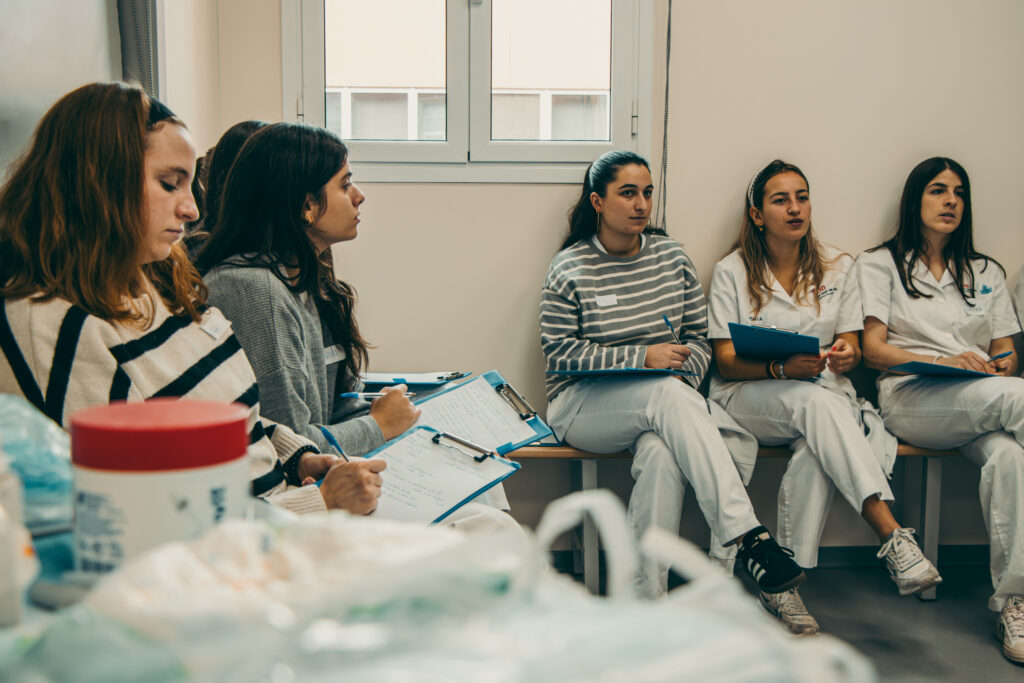
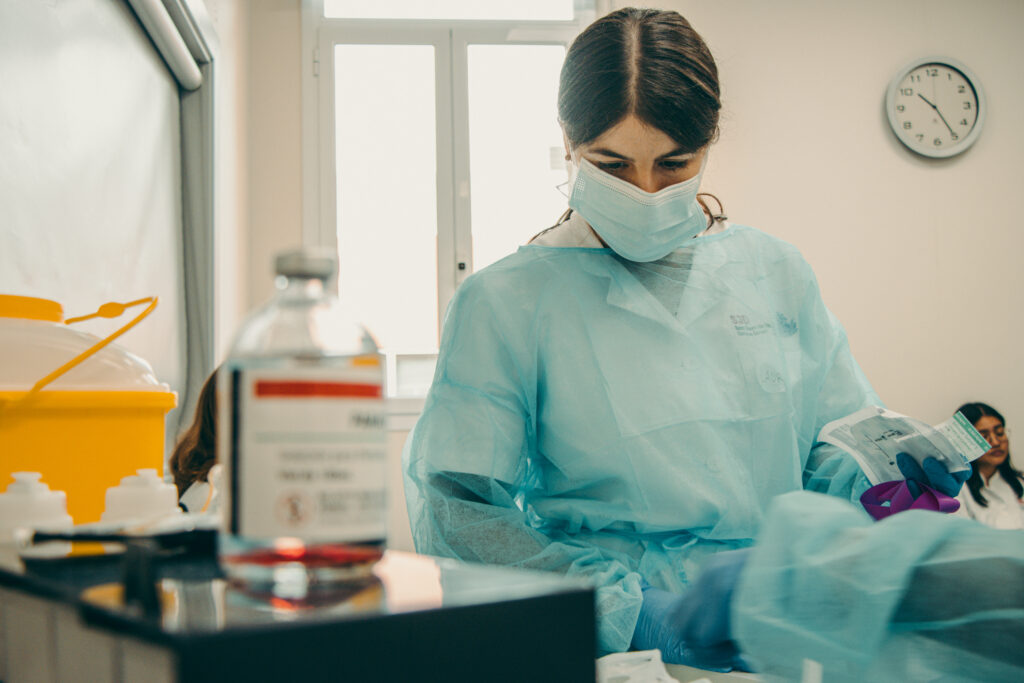
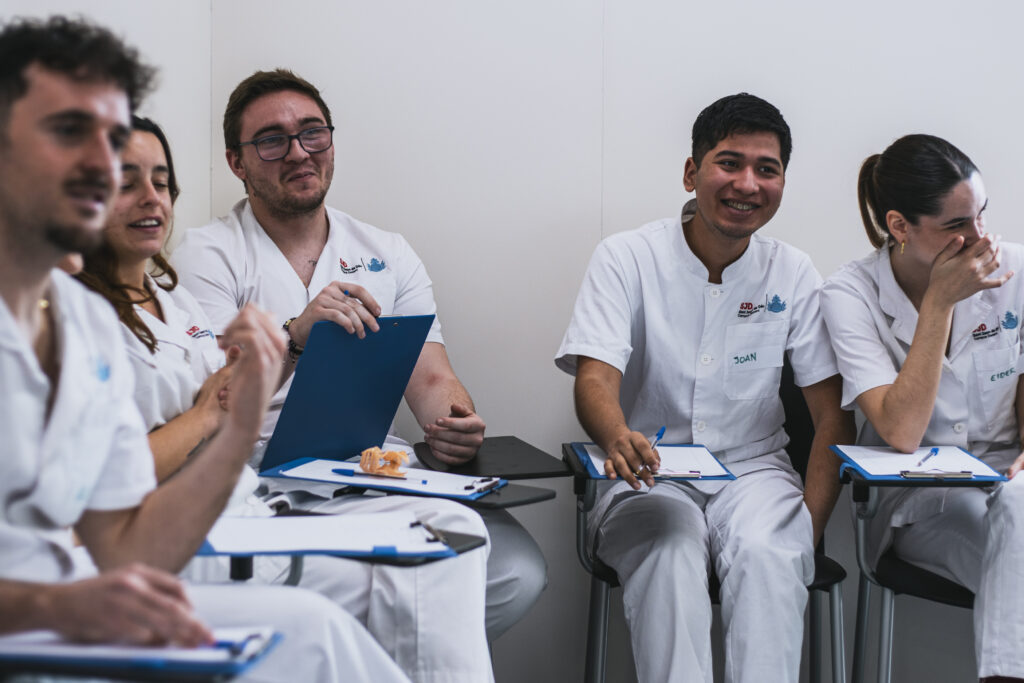
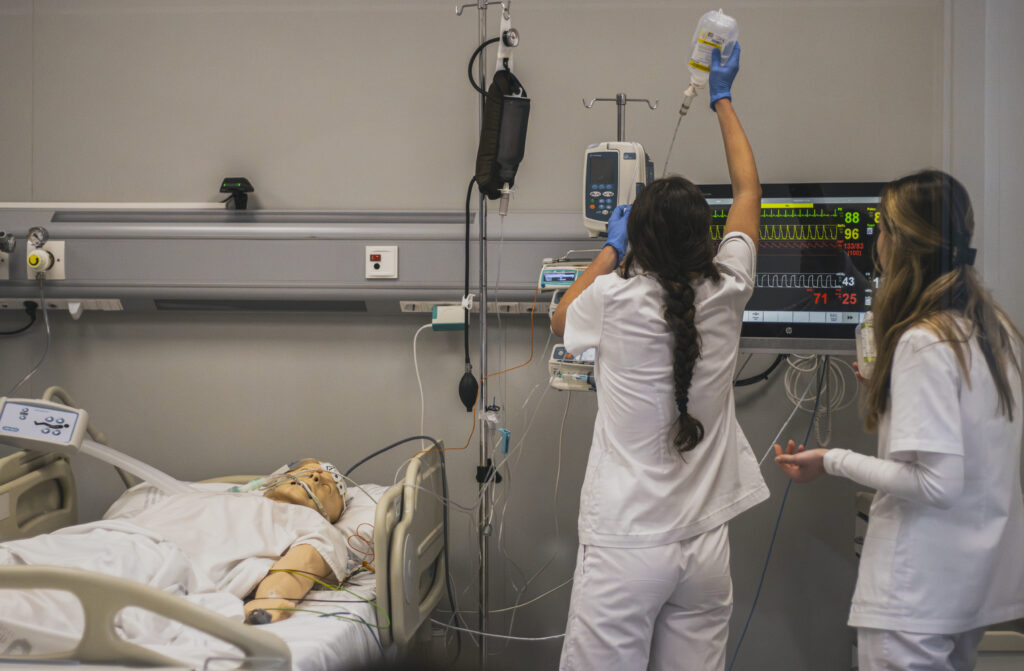
As part of the academic excellence at the Sant Joan de Déu Teaching Campus, all students in the Bachelor of Nursing program receive the Basic Life Support course and the Immediate Life Support course accredited by the European Resuscitation Council (ERC). These courses provide the opportunity to acquire critical first aid skills and enable students to respond in emergency situations.
Problem-based learning (PBL)
Practical training in health centers
Cooperative Learning
Simulations with actors
High-fidelity simulations
Interactive clinical scenarios
Competitive debate
Case Resolution

National and International Mobility

Practicum for the Bachelor of Science in Nursing
Student Services
The CDSJD offers various student support and guidance services to promote their well-being and personal and academic development.
Among these, the Student Counseling and Psychological Support Service (SOAP), the Tutoring Action Plan (PAT), and the Special Educational Needs Service (NESSE) stand out.
Private Development Initiative
A team with real clinical experience, an educational calling, and a commitment to students.
Academic Management
Academic Management addresses administrative and academic matters such as enrollment, obtaining certificates and degrees, convalidations, adaptations, transfers, scholarships, etc.

June 2026 Call
University Pre-registration Period: June 2 to 26
Provisional dates
1st choice assignment: July 10
Provisional dates
2nd assignment: July 23
Provisional dates
3rd assignment: September 4
Provisional dates
September 2026 Call
1st assignment: September 25
Provisional dates
2nd assignment: October 1st
Provisional dates
Registration documents
- 1 color passport-size photograph
- 1 photocopy of the ID card
- Photocopy of the Large Family Card (if applicable)
- Photocopy of the Individual Health Card (TSI)
- Proof of Social Security number (if you do not have your own number, you must apply for one with the Social Security Administration and provide it to the secretariat)
- B2 level English certificate or equivalent (if applicable). Or for another language: Italian, German, or French. This certificate must be valid, if applicable.
- Official certificate of the University Entrance Examinations (PAU) with the admission score for the degree program. Admission through pathways 0 and 7.
- Original Academic Certificate. Access via route 4 to 8.
- Original Academic Certificate. Access via 2, plus proof of payment of the transcript transfer fee.
Price
Prices for the 2026/2027 course.
Scholarships
Some of the scholarships and grants that can be applied for to pursue the Bachelor’s Degree in Nursing are:
Payment methods
Tuition payment
Payment will be made once enrollment has been completed, through the following methods:
a) Lump sum payment
Students who opt for a single payment must pay in one lump sum the total amount resulting from their enrollment, according to the established payment method, within a maximum of seven calendar days from the date of enrollment. If you choose to pay by transfer, once the payment has been made, you must send the proof of payment to the email address: campus.pagament@sjd.edu.es
b) Instalment payment
Students who opt for the installment payment plan must submit, at the time of enrollment, an authorization for direct debit of payments in the SEPA-established format.
Access routes
University Admission for High School Graduates (PAU)
University access for those over 25 years old
University access for people over 45
Access for graduates of upper secondary vocational training cycles (CFGS)
Access for people who have begun Spanish university studies
To enroll in a program, you must have a minimum of 30 recognized ECTS credits. If you do not have them, you can apply to the program through the pre-enrollment process.
Students with incomplete university studies may apply for admission by changing their program of study. To complete this procedure, students must contact the Secretariat of the program for which they are requesting a spot and submit the corresponding application, attaching the following documentation:
Prerequisites:
- Not having lost the right to continue studies at the home university.
- Students who only enroll in the PAEs are not accepted.
This option is compatible with University Pre-enrollment. We recommend that you pursue both options (applying directly for a spot at the institution and University Pre-enrollment).
Once all the documentation has been submitted, the relevant authority will issue a decision on the recognition request within the established timeframe and will notify the interested party of the resolution.
Documentation is accepted in paper or digital format, provided that the necessary requirements for its validity are met.
Under no circumstances are the following accepted:
- Any other documentation without academic validity
- Simple copies
- Screenshots or downloads from virtual platforms
If more than 30 credits are recognized and the student ultimately gains admission to the university, they may enroll during the period established for each course. It is essential that, once the credit recognition request has been favorably resolved, the enrollment be formalized.
The center establishes the criteria for selecting candidates. They can be viewed here.
If you are not granted admission to the University, students may apply for admission through the University Pre-enrollment process. This procedure must be completed via the Accés Universitat portal.
For any questions, you can contact Academic Management: campus.secretariagrau@sjd.edu.es
University Pre-registration
When and where can you complete the pre-registration?
You can check the key dates for pre-registration on the Universities Channel website.
Pre-registration locations:
- Corresponding delegations
- Office of University Access (OUA) Via Laietana 2 (08003). Barcelona. Tel.: 93 223 03 23 / 93 223 25 92
- On the internet
More information
- Universities Channel
- Office for University Access (OUA) Via Laietana 2 (08003). Barcelona. Tel.: 93 223 03 23 / 93 223 25 91
You are currently viewing information about the Bachelor’s Degree in Nursing affiliated with UVic-UCC, implemented starting in the 2025/2026 academic year. The curriculum with the University of Barcelona (UB) is in the process of being phased out, but the Sant Joan de Déu Teaching Campus continues to maintain and promote nursing education.
If you’re pursuing your degree with the UB, access all the information specific to your program: enrollment, procedures, regulations, graduation timeline, internships, thesis, etc.