
Mode
In-person
Duration
4 academic years
Schedule
Morning shift: 8 AM – 2 PM | Afternoon shift: 3 PM – 9 PM
Languages
Catalan
Credits
two hundred forty
Places
two hundred twenty
Presentation
The Bachelor’s Degree program in Nursing, currently being phased out at the CDSJD, is organized in accordance with the approved curriculum, which is broadly similar to that of other equivalent centers affiliated with or integrated into the University of Barcelona.
The Nursing program integrates a systematic and coherent set of subjects that allows the student to receive an adequate education in the field of the nursing profession and earn a Bachelor of Science in Nursing degree.
Professional Outings
Once you have completed the degree, you will be able to practice as a nurse in hospitals, primary care, socio-sanitary centers, research, teaching, and healthcare management. In addition, the degree allows you to access university master’s programs.
Curriculum
The degree is structured over 4 academic years with a total of 240 ECTS credits, including required and elective courses, practical training, and the Final Degree Project.
First course
Annual
15 ECTS
12 ECTS
9 ECTS
First Semester
6 ECTS
6 ECTS
Second Semester
6 ECTS
6 ECTS
Second course
Annual
12 ECTS
12 ECTS
First Semester
6 ECTS
6 ECTS
6 ECTS
Second Semester
6 ECTS
6 ECTS
6 ECTS
Third grade
Annual
9 ECTS
9 ECTS
22 ECTS
20 ECTS
Fourth grade
First Semester
6 ECTS
6 ECTS
6 ECTS
6 ECTS
Optatives
6 ECTS
Second Semester
30 ECTS











Extinction calendar
The CDSJD has formalized its withdrawal from the University of Barcelona for all academic and administrative purposes, and this entails the cancellation and discontinuation of the Bachelor’s Degree in Nursing, effective from the 2025-2026 academic year.
The degree will be phased out gradually, year by year, starting in the 2025–2026 academic year, from which point no new students will be able to enroll in this program at the University of Barcelona.
In any case, students will have the right to sit for exams in the two academic years following the start of the progressive phase-out, in accordance with the phase-out schedule. For these purposes, a tutoring program will be established so that students can receive the necessary guidance on the contents of the courses for which instruction has ceased but that have not yet been approved, and this will continue until all relevant exam opportunities have been exhausted.
The phasing-out schedule for the Bachelor of Nursing degree is as follows:
| 2025/26 School Year | 2026/27 school year | 2027/28 school year | 2028/29 school year | 2029/30 school year | 2030/31 school year | |
| First course | Extinction without teaching | Extinction without teaching | Extinct | |||
| Second Course | Teaching | Extinction without teaching | Extinction without teaching | Extinct | ||
| 3rd Course | Teaching | Teaching | Extinction without teaching | Extinction without teaching | Extinct | |
| Fourth Grade | Teaching | Teaching | Teaching | Extinction without teaching | Extinction without teaching | Extinct |
If at any time before the deadlines in the agreed-upon calendar, no student remains affiliated with UB, the center’s phased withdrawal process will be considered complete, regardless of the deadlines set in the calendar.
Competencies
- Ethical commitment (critical and self-critical ability and the ability to demonstrate attitudes consistent with ethical and deontological principles). Ability to maintain the dignity, privacy, and confidentiality of individuals. Practices in accordance with the profession's codes of ethics and conduct. Practices in a way that respects the dignity, culture, values, beliefs, and rights of individuals and groups. Defends the rights of individuals and groups within the health care system.
- Ability to learn and take responsibility (ability to analyze, synthesize, and have a global perspective, apply knowledge to practice, and make decisions and adapt to new situations). Relevant knowledge and ability to apply basic and life sciences. Coordinate, use, and manage material and human resources effectively and efficiently. Foster, manage, and evaluate the introduction of innovations and changes in nursing practice and in the organization of care. Integrate organizational policies, guidelines, and professional standards into practice.
- Teamwork (ability to collaborate with others, contribute to a common project, and collaborate in interdisciplinary and multicultural teams). Ability to work and communicate collaboratively and effectively with all team members to prioritize and manage time efficiently. Ability to lead and coordinate a team by delegating tasks appropriately.
- Creative and entrepreneurial capacity (ability to formulate, design, and manage projects and to seek and integrate new knowledge and attitudes). Identify the importance of research for achieving the health objectives of the individual and groups. Use the best available scientific evidence, nursing experience, and respect for the values and beliefs of the individual and group when providing and evaluating nursing care. Support and contribute to research in nursing and health care in general. Participate in quality improvement activities. Actively contribute to continuing professional development to improve nursing practice. Contribute to the professional development of other members of the healthcare team. Use reflective practice to identify one's own professional abilities and limitations and seek appropriate support. Seize opportunities to learn from others who contribute to healthcare.
- Sustainability (ability to assess the social and environmental impact of actions in one's own area and to demonstrate integrated and systematic visions). Coordinates, uses, and manages material and human resources effectively and efficiently. Fosters, manages, and evaluates the introduction of innovations and changes in nursing practice and in the organization of care. Integrates organizational policies, guidelines, and professional standards into practice. Assesses risk and actively promotes the well-being and safety of everyone in the work environment.
- Communication skills (ability to understand and express oneself orally and in writing in Catalan, Spanish, and a third language, with command of specialized language / ability to search for, use, and integrate information). Establishes, develops, maintains, and appropriately terminates the therapeutic relationship. Communicates effectively with the person and group to facilitate the delivery of care. Uses appropriate strategies to promote the person's and group's self-esteem, dignity, and comfort. Facilitates and supports the person and group in decision-making.
- Professional, ethical, and legal practice. Responsibility. Accepts the duty to be accountable and the responsibility for one's own professional judgments and actions. Recognizes and differentiates their responsibility from that of other members of the health care team, professionals and non-professionals.
- Professional, ethical, and legal practice. Ethical practice. Practices in accordance with the profession's codes of deontology and conduct. Practices in a way that respects the dignity, culture, values, beliefs, and rights of individuals and groups. Defends the rights of individuals and groups within the health care system.
- Professional, ethical, and legal practice. Legal practice. Practices in accordance with relevant legislation and common law. Recognizes and responds appropriately to practices that may endanger a person's safety, privacy, or dignity. Integrates knowledge, skills, and attitudes to provide safe and effective nursing care.
- Care delivery and management. Care delivery. Assessment. Uses an evidence-based assessment framework to collect data on the person's and group's physical health, mental health, and sociocultural aspects. Analyzes, interprets, and documents the obtained data.
- Care Provision and Management. Care delivery. Planning. Establishes priorities for care in collaboration with the person and group. Identifies the expected outcomes and the timeframe for achieving them in collaboration with the person and group. Reviews and documents the collaborative care plan with the person and group. Ensures continuity of care to achieve the objectives.
- Care Provision and Management. Provision of Care. Implementation. Effectively applies nursing care to the individual and group according to the planned care. Responds effectively in unforeseen or rapidly changing situations. Educates the individual and group to promote autonomy and control over their health. Uses resources effectively and efficiently to promote excellent nursing care.
- Care delivery and management. Care delivery. Assessment. Evaluate the progress made toward achieving the expected outcomes in collaboration with the individual and group. Document and use the assessment results to modify the care plan.
- Care delivery and management. Care delivery. Therapeutic communication and interpersonal relationships. Establishes, develops, maintains, and appropriately terminates the therapeutic relationship. Communicates effectively with the person and family to facilitate the delivery of care. Uses appropriate strategies to promote the person's and family's self-esteem, dignity, and comfort. Facilitates and supports the person and family in decision-making.
- Care delivery and management. Care management. Safe environment. Provides a physical, psychosocial, cultural, and spiritual environment that promotes the safety of the individual and group.
- Care delivery and management. Care management. Interdisciplinary practice. Collaborates with the interdisciplinary health team to provide comprehensive nursing care. Facilitates coordination of care to achieve expected health outcomes.
- Care delivery and management. Management of care. Delegation and supervision. Directs, supervises, and evaluates delegated care to ensure it is performed safely and effectively. Delegates aspects of care to others according to their competence.
- Care delivery and management. Care management. Care organization. Coordinates, utilizes, and manages material and human resources effectively and efficiently. Promotes, manages, and evaluates the introduction of innovations and changes in nursing practice and care organization. Integrates organizational policies and guidelines and professional standards into practice.
- Professional development. Identifies the importance of research for achieving the health goals of the person and groups. Uses the best available scientific evidence, nursing expertise, and respect for the person's and group's values and beliefs when providing and evaluating nursing care. Supports and contributes to research in nursing and health care in general.
- Professional development. Participates in quality improvement activities.
- Professional development. Actively contributes to ongoing professional development to improve nursing practice. Contributes to the professional development of other members of the healthcare team.
- Professional development. Use reflective practice to identify your professional strengths and limitations and seek appropriate support. Take advantage of opportunities to learn from others who contribute to healthcare.
Methodology
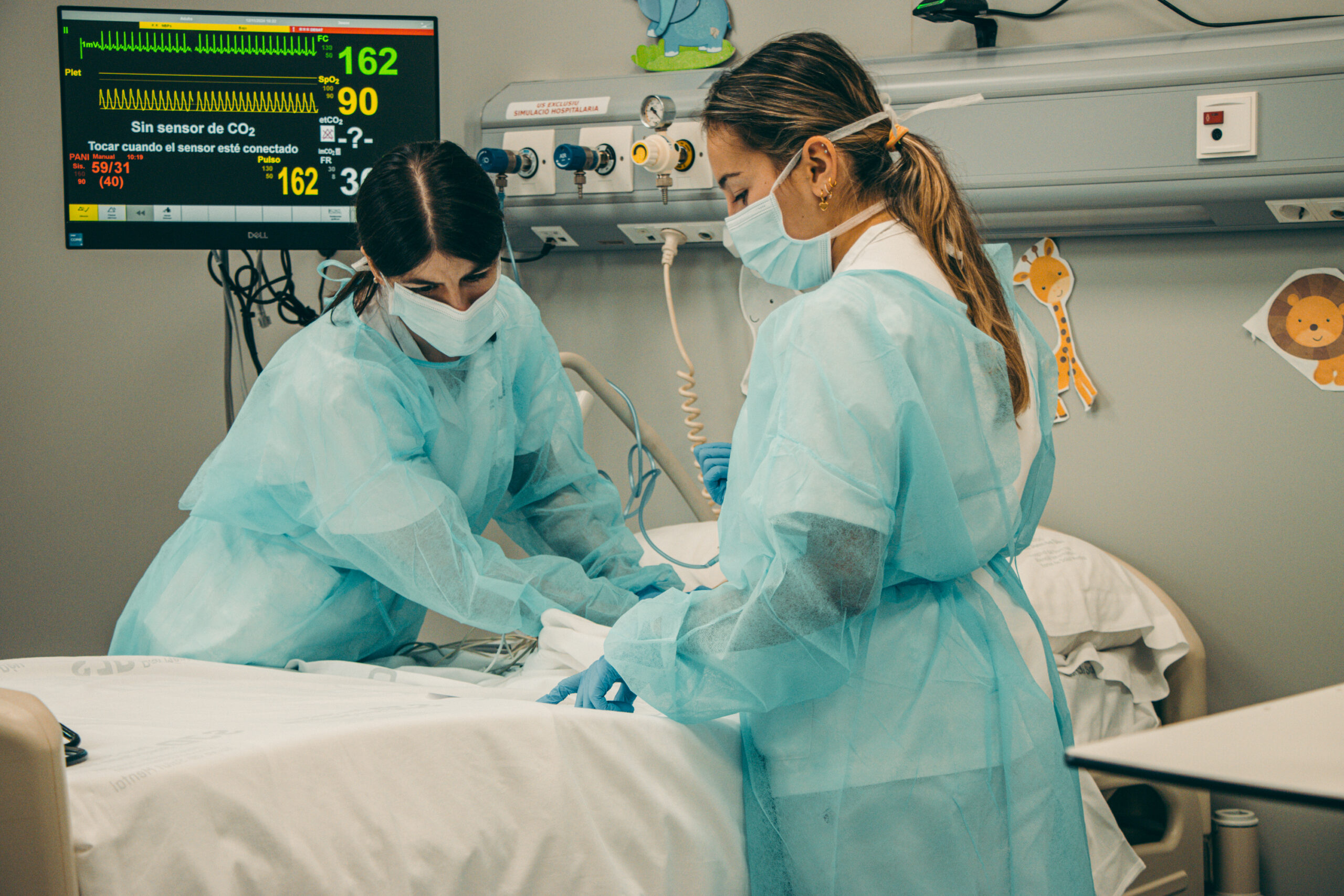
As part of the academic excellence at the Sant Joan de Déu Teaching Campus, all students in the Bachelor of Nursing program receive the Basic Life Support course and the Immediate Life Support course accredited by the European Resuscitation Council (ERC). These courses provide the opportunity to acquire critical first aid skills and equip students to respond in emergency situations.
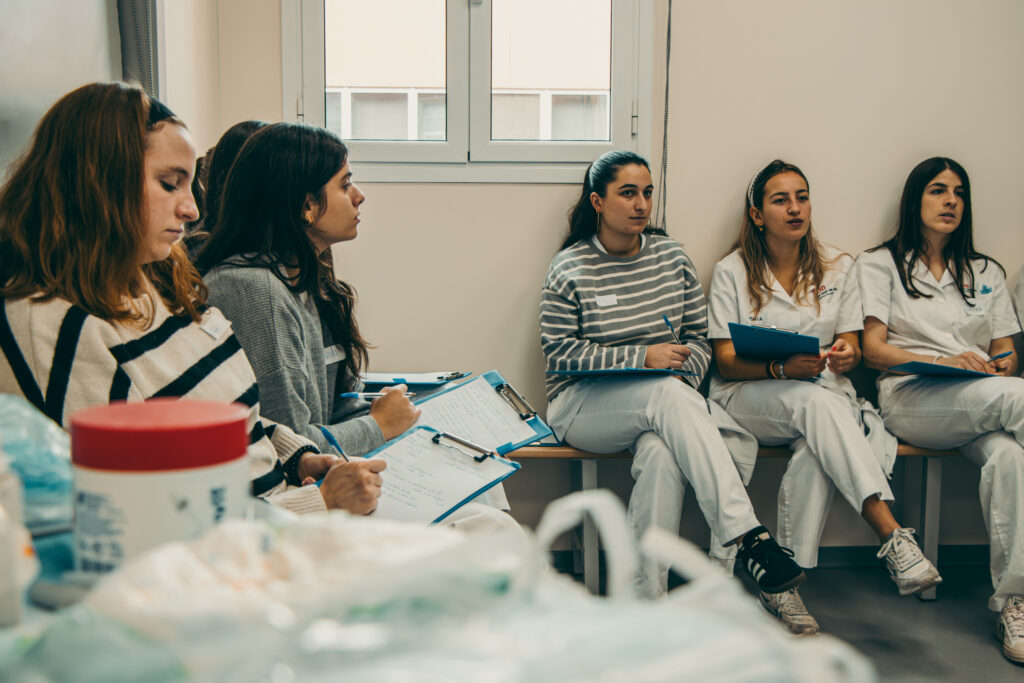
Problem-based learning (PBL)
Practical training in health centers
Cooperative Learning
Simulations with actors
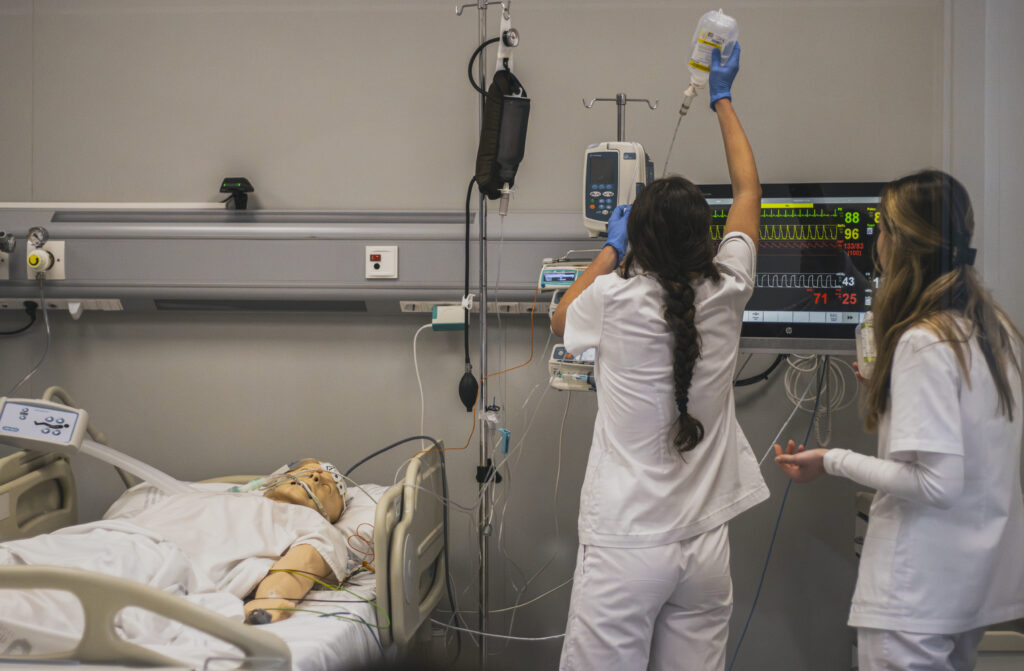
High-fidelity simulations
Interactive clinical scenarios
Competitive debate
Case Resolution

National and International Mobility

Practicum for the Bachelor of Science in Nursing
Student Services
The CDSJD offers various student support and guidance services to promote their well-being and personal and academic development.
Among these, the Student Counseling and Psychological Support Service (SOAP), the Tutoring Action Plan (PAT), and the Special Educational Needs Service (NESSE) stand out.
Private Development Initiative
A team with real clinical experience, an educational calling, and a commitment to students.
Academic Management
Academic management addresses administrative and academic matters such as enrollment, obtaining certificates and degrees, convalidations, adaptations, transfers, scholarships, etc.

Scholarships
Some of the scholarships and grants that can be applied for to pursue the Bachelor’s Degree in Nursing are:
Price
Payment methods
Tuition payment
Payment will be made once enrollment has been completed, through the following methods:
a) Lump sum payment
Students who opt for a single payment must pay in one lump sum the total amount resulting from their enrollment, according to the established payment method, within a maximum of seven calendar days from the date of enrollment. If you choose to pay by transfer, once the payment has been made, you must send the proof of payment to the email address: campus.pagament@sjd.edu.es
b) Instalment payment
Students who opt for the installment payment plan must submit, at the time of enrollment, an authorization for direct debit of payments in the SEPA-established format.